
Looking for fun ways to keep your little one busy while helping them learn new skills? Children love exploring, drawing, coloring, and discovering new things. With the right activities, everyday moments can become exciting learning experiences.
For children aged 2–7, learning doesn’t always need to happen through textbooks. Simple activities at home can encourage creativity, early literacy, number recognition, and problem-solving.
At BOBO.Kids, we believe learning should be fun, engaging, and accessible to every little learner. Our printable worksheets help parents create enjoyable learning moments at home.
Here are 10 fun learning activities you can try with your child!
1. Alphabet Learning and Letter Recognition
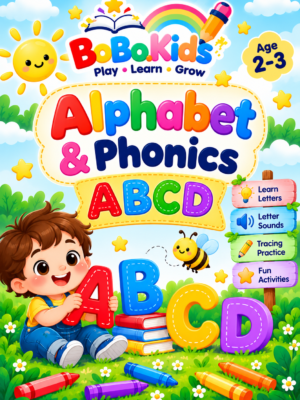
Introducing letters is an important step in early learning. Start with simple activities that help your child recognize letters and connect them with familiar objects.
Try these activities:
- Identify letters from A to Z.
- Match letters with pictures, such as A for Apple and B for Ball.
- Trace uppercase and lowercase letters.
- Color pictures associated with different letters.
Parent tip: Begin with a few letters at a time. Make the activity interactive by asking your child to find objects around the house that begin with the same letter.
2. Counting Numbers from 1 to 10
Counting activities help children become familiar with numbers and quantities.
You can make number learning fun by using toys, blocks, fruits, or printable counting worksheets.
Try these activities:
- Count toys together.
- Match numbers with the correct quantity.
- Trace numbers from 1 to 10.
- Count objects in colorful pictures.
For example, place three toy cars on the table and ask your child to count them.
These simple exercises introduce counting through everyday experiences.
3. Fun Coloring Activities
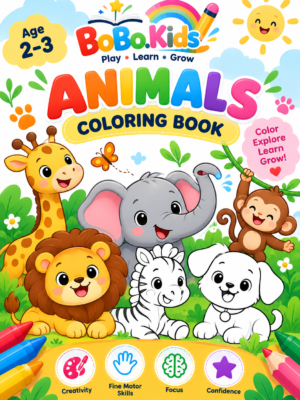
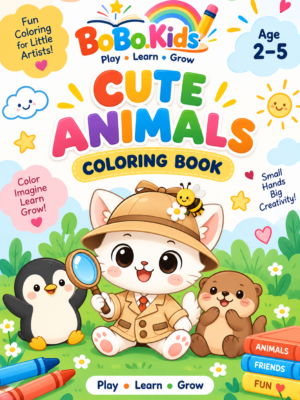
Coloring encourages children to explore colors, express creativity, and practice hand control.
Give your child age-appropriate coloring sheets featuring animals, fruits, vehicles, and everyday objects.
Try these activities:
- Color an apple red.
- Color a banana yellow.
- Explore different colors using crayons.
- Create a colorful picture together.
Let your child experiment with colors rather than expecting every picture to look perfect.
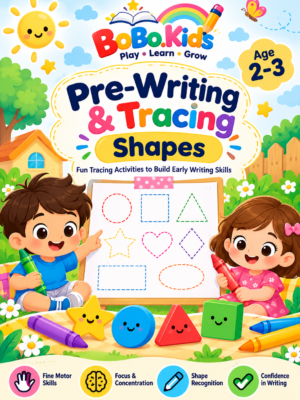
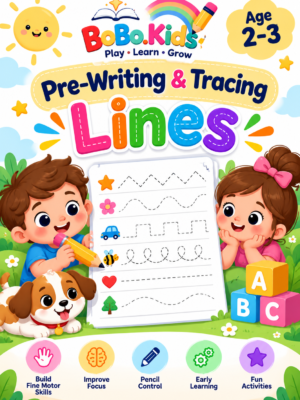
4. Pre-Writing and Tracing Practice
Before children begin writing letters and numbers, they can practice simple lines and shapes.
Pre-writing activities provide opportunities to develop hand coordination and pencil control.
Try these activities:
- Trace straight lines.
- Practice curved and zigzag lines.
- Follow dotted paths.
- Trace circles and simple shapes.
Start with large, simple patterns and gradually introduce more challenging activities as your child becomes comfortable.
5. Animal Matching Games
Children enjoy learning about animals and discovering how they differ.
Matching activities encourage observation, visual recognition, and early problem-solving.
Try these activities:
- Match animals with their pictures.
- Match animals with their babies.
- Identify animals by their sounds.
- Match animals with their habitats using age-appropriate pictures.
Ask your child questions such as, “Which animal says meow?” or “Can you find the elephant?”
6. Learn Shapes and Colors
Basic shapes and colors appear everywhere in a child’s environment.
Learning to recognize them can make everyday exploration more interesting.
Try these activities:
- Identify circles, squares, triangles, and rectangles.
- Find objects of different colors around the house.
- Match shapes with similar objects.
- Color shapes according to simple instructions.
For example, ask your child to find a circular plate or a square cushion.
7. First Words and Vocabulary Building
Children gradually develop their vocabulary by listening, observing, and interacting with the world around them.
Picture-based worksheets can provide opportunities to introduce familiar words.
Try these activities:
- Identify common objects in pictures.
- Name fruits, animals, toys, and household items.
- Match words with pictures.
- Practice saying simple words together.
Keep the experience relaxed and encourage your child to participate at their own pace.
8. Big and Small Sorting Activities
Sorting activities help children compare objects and recognize differences.
Start with simple concepts such as big and small, long and short, or same and different.
Try these activities:
- Sort toys by size.
- Match large and small pictures.
- Find objects that look alike.
- Group objects according to color or shape.
These playful exercises encourage children to observe details and organize information.
9. Simple Puzzles and Matching Worksheets
Puzzles give children opportunities to observe patterns, compare pictures, and find solutions.
Choose activities that match your child’s age and current abilities.
Try these activities:
- Match identical pictures.
- Complete simple picture patterns.
- Find the missing object.
- Identify differences between two pictures.
Celebrate your child’s effort and encourage them to try again when an activity feels challenging.
10. Create a Daily Learning Routine
Children benefit from having regular opportunities to explore and practice new skills.
You don’t need to create a complicated timetable. Start with a short, enjoyable activity that fits into your family’s daily routine.
For example:
- Morning: Practice letters or numbers.
- Afternoon: Enjoy coloring or matching activities.
- Evening: Read picture books or identify objects together.
Adapt activities to your child’s age, interests, and attention span. The goal is to make learning enjoyable rather than turning every moment into a lesson.
Why Choose Printable Worksheets for Kids?
Printable worksheets offer a convenient way to introduce structured learning activities at home.
With printable worksheets, parents can:
- Learn at home: Practice early learning skills in a familiar environment.
- Print when needed: Keep extra copies of favorite activities.
- Choose suitable topics: Explore letters, numbers, coloring, tracing, shapes, and matching.
- Encourage hands-on activities: Give children opportunities to draw, trace, color, and solve simple tasks.
- Learn together: Participate in activities and celebrate small achievements.
Every child learns differently, so choose activities that suit your child’s interests and developmental stage.
Discover Fun Printable Worksheets with BOBO.Kids
At BOBO.Kids, our goal is to make early learning enjoyable for children and convenient for parents.
Explore printable learning activities covering:
- Alphabet and phonics
- Numbers and counting
- Pre-writing and tracing
- Coloring activities
- Shapes and colors
- Animal matching
- First words and vocabulary
- Sorting and thinking activities
Whether your child is just beginning to recognize letters or is ready to explore numbers and simple puzzles, you can discover activities that make learning more engaging.
Ready to make learning fun?
Visit BOBO.Kids to explore printable worksheets and activity books for children aged 2–7.
Download → Print → Play → Learn!
Frequently Asked Questions (FAQs)
1. What are the best learning activities for kids aged 2–7?
Age-appropriate activities include coloring, shape recognition, picture matching, simple puzzles, counting, alphabet recognition, and pre-writing practice. Choose activities according to your child’s age and abilities.
2. Are printable worksheets useful for preschool children?
Printable worksheets can provide structured opportunities to practice early learning skills. They work especially well when combined with play, conversation, and hands-on activities.
3. How long should children spend on worksheets?
There is no single ideal duration for every child. Begin with short sessions and adjust according to your child’s interest and attention span. Include breaks and opportunities for movement.
4. How can parents make learning fun at home?
Use colorful activities, familiar objects, games, storytelling, and positive encouragement. Allow children to explore at their own pace and celebrate their efforts.
5. Where can I find printable worksheets for kids?
You can explore printable learning worksheets and activity books for children aged 2–7 at BOBO.Kids.